Brakes fail gradually, not overnight. Most drivers notice problems only after squealing or grinding starts — but your pedal, steering wheel, and stopping distance often reveal wear weeks earlier if you know what to watch for.
Changes in Pedal Feel
A soft or spongy pedal can indicate air in the hydraulic lines, fluid contamination, or a failing master cylinder — not just worn pads. Conversely, a pedal that sits higher than usual or requires more force may signal glazed pads, stuck calipers, or uneven wear across the axle.
Pay attention during your first stop each morning. If the pedal travels farther than it did a month ago, schedule an inspection before the condition worsens.
Noise Is Not the First Warning
Many modern pads include wear indicators that contact the rotor when material is low, producing a high-pitched squeal. That sound is intentional — but by the time you hear it, significant material may already be gone.
Sounds that need immediate attention
- Metallic grinding — pad backing plate contacting the rotor
- Rhythmic clicking at low speed — often hardware or caliper slide issues
- Constant hum under light braking — possible rotor thickness variation
Visual and Physical Clues
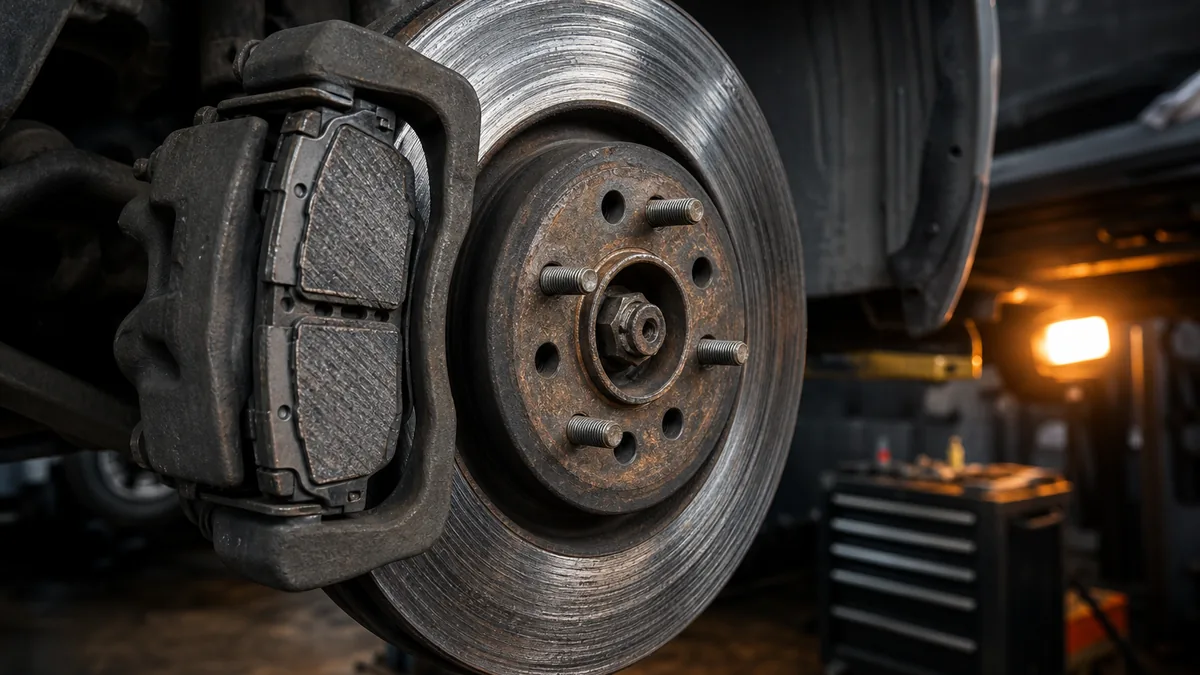
Through wheel spokes, you can sometimes see pad thickness. Less than three millimeters of friction material means service is due soon. Rotors should appear smooth and even; deep grooves, rust lips, or blue discoloration suggest overheating or prolonged wear.
Vibration through the steering wheel during braking usually points to front rotor runout or thickness variation. A pulling sensation to one side may indicate a stuck caliper or uneven pad wear.
When to Service vs. When to Monitor
Not every noise requires same-day replacement. Glazed pads from highway driving may improve after a few firm stops. But grinding, extended pedal travel, or warning lights demand prompt professional evaluation.
At metamorphos, brake inspections include pad thickness measurement, rotor condition scoring, caliper slide checks, and fluid moisture testing — so recommendations are based on measured wear, not guesswork.